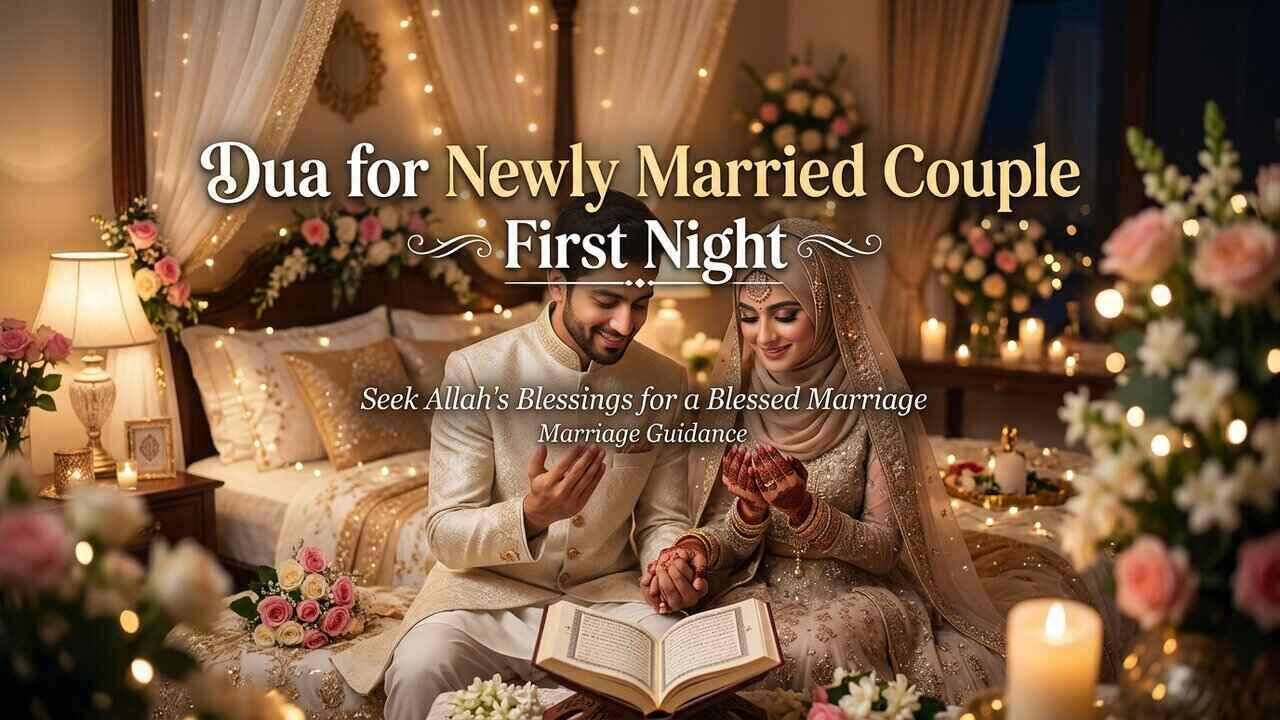
3 Sunnah Dua for Newly Married Couple First Night
You finally made it. The nikah is done, the guests have gone home, and the two of you are alone. Nerves, excitement, tiredness, maybe a little awkwardness. That’s normal.
The best dua for newly married couple first night is a short set of three supplications taken from authentic hadith: the dua of congratulation, the dua said while placing a hand on your spouse’s forehead, and the dua before intimacy. Add two rakat of prayer together and you have the Sunnah of the first night of marriage in a nutshell.
This guide walks you through each one with the Arabic transliteration, the English meaning, and the right moment to say it. You’ll also learn how to pray 2 rakat namaz on your wedding night, plus the mistakes that quietly drain the barakah out of those first hours.
Why the First Night of Marriage Matters in Islam
Islam treats marriage as a covenant, not a party. The Quran calls it a “firm covenant” (mithaqan ghaliza), and the first night is where that covenant starts to become real.
That’s why the Prophet ﷺ taught his companions to begin with Allah’s name and a request for goodness. You’re not performing a ritual for its own sake. You’re asking the One who joined your hearts to protect what he joined.
Think of it like laying the first brick of a house. A crooked first brick doesn’t always collapse the wall, but you’ll feel it all the way up. If you want to understand why commitments carry so much weight in Islam, our article on the hadith about keeping promises is a good companion read.
The 3 Sunnah Dua for Newly Married Couple First Night
Here are the three supplications, in the order you’d naturally use them. Each one is rooted in hadith found in the major collections.
1. The Dua of Congratulation and Blessing
This is the dua people say to a couple, and the couple can say it for each other too.
Transliteration: Barakallahu laka, wa baraka ‘alayka, wa jama’a baynakuma fi khayr.
English meaning: May Allah bless you, shower His blessings upon you, and bring you both together in goodness.
This is reported in Abu Dawud and Tirmidhi, and scholars classify it as authentic. It’s short, warm, and easy to memorize, so you’ve got no excuse to skip it.
Best time to say it: When you first sit together after the wedding, or the moment the doors close behind the last guest.
2. The Dua When You Place Your Hand on Your Spouse’s Forehead
This is the one most couples have never heard of, and it’s the heart of the Sunnah of the first night of marriage.
According to the hadith recorded by Abu Dawud and Ibn Majah, the Prophet ﷺ taught that when a man marries, he should hold the front of his wife’s head, say Bismillah, ask Allah for barakah, and then say:
Transliteration: Allahumma inni as’aluka khayraha wa khayra ma jabaltaha ‘alayh, wa a’udhu bika min sharriha wa sharri ma jabaltaha ‘alayh.
English meaning: O Allah, I ask You for her goodness and the good nature You have placed in her, and I seek refuge in You from her harm and the harm of what You have placed in her nature.
Notice what this dua does. It doesn’t assume perfection. It admits that every person, you included, carries strengths and flaws, and it asks Allah to bring out the first and shield you from the second.
A quick note for wives: The hadith addresses the husband, but scholars say the wife can make a similar dua for her husband, asking for his goodness and protection from his faults. The wording isn’t narrated for her, so say it as a personal supplication rather than claiming it as a fixed Sunnah text.
3. The Dua Before Intimacy
Both Bukhari and Muslim record this one.
Transliteration: Bismillah. Allahumma jannibna ash-shaytan, wa jannib ash-shaytana ma razaqtana.
English meaning: In the name of Allah. O Allah, keep Satan away from us, and keep Satan away from what You grant us.
The Prophet ﷺ said that if a child is decreed from that union, Satan will never harm that child. That’s a remarkable promise, and it takes five seconds to say.
If you’re thinking about the family you hope to build, you may also like our piece on protecting little ones with Islamic guidance.
How to Pray 2 Rakat Namaz on Wedding Night
Praying together on the first night is one of the most beautiful parts of the Sunnah. It isn’t a hadith from the Prophet ﷺ himself, though. It’s reported as the practice and advice of the Companions, including Abu Sa’id, a freed slave of Abu Usayd, and Ibn Mas’ud, as recorded in early collections such as Ibn Abi Shaybah. Many scholars consider it recommended. Don’t present it as an obligation, and don’t let anyone shame you for adjusting it to your situation.
Here’s the simple way to do it.
Step-by-Step: Praying Together as a Couple
- Make wudu separately. Both of you.
- Stand side by side in the direction of the Qibla, with the husband in front and the wife behind him, as in any congregational prayer.
- Intend a voluntary (nafl) prayer of two rakat. Intention lives in the heart, so there’s no need to say it aloud.
- Pray it like any normal two-rakat prayer. In each rakat recite Al-Fatiha followed by a surah you know well. Surah Al-Ikhlas and Surah Al-Kafirun are easy and short.
- After the salaam, make dua. The husband leads, the wife says ameen. Ask for love, patience, modesty, a halal home, and righteous children.
That’s it. Five minutes, maybe less.
What Should You Say in Your Dua After Prayer?
You don’t need poetic Arabic. Speak from your heart in whatever language you’re most honest in. Ask Allah to make the marriage a source of calm, to forgive your past mistakes, and to keep both of you from arguments that wound. If you carry regrets from before the wedding, this is also a good moment to renew sincere repentance. Our guide on what tawbah means in Islam explains how to do it properly.
Dua for First Night of Marriage in English (Quick Reference)
Sometimes you just need the meanings in one glance. Here’s a handy table you can screenshot.
| Moment | Dua in English | Source |
|---|---|---|
| Greeting the couple | May Allah bless you, bless you both, and unite you in goodness. | Abu Dawud, Tirmidhi |
| Hand on forehead | O Allah, I ask for her goodness and the good You placed in her; I seek refuge from her harm and what You placed in her nature. | Abu Dawud, Ibn Majah |
| Before intimacy | In Allah’s name. O Allah, keep Satan away from us and from what You grant us. | Bukhari, Muslim |
| After 2 rakat | Personal dua, in any language | Practice of the Companions |
The Best Dua for Newly Married Couple: Which One Matters Most?
People often ask which single dua is “the best.” Honestly, they work as a set, not as rivals. The forehead dua sets the emotional tone, the intimacy dua provides protection, and the blessing dua frames the whole marriage in gratitude.
If you can only memorize one tonight because you’re overwhelmed, memorize the forehead dua. It’s specific to the first night, and few couples know it. The others you’ll use for the rest of your married life.
Common Mistakes to Avoid on Your Wedding Night
The Sunnah is gentle. Our habits, on the other hand, are sometimes not. Watch out for these.
- Skipping Isha or Fajr because you’re exhausted. The wedding day is long, but missing obligatory prayers on the very first night is a poor start. Pray first, then rest.
- Treating the Sunnah like a checklist. If you rush through the words while scrolling your phone, you’ve kept the form and lost the point. Slow down.
- Putting pressure on each other. Islam encourages kindness, playfulness, and patience. Many couples need time to feel comfortable, and that’s perfectly fine.
- Believing myths. No authentic hadith says the first night must include special foods, fixed prayers beyond those above, or particular numbers of rakat beyond two.
- Comparing yourselves with social media weddings. Filters don’t have barakah. Your quiet prayer does.
What Goes Well When You Follow the Sunnah
Let’s be fair about both sides. Couples who begin with dua often say they feel calmer, more connected, and less anxious about the unknown. Starting with prayer also sets a habit. If you pray together on night one, praying together on night one hundred feels natural.
On the flip side, nobody is promised a perfect marriage just because they said the right words. Dua is not a magic spell. It works alongside honesty, listening, and effort. Marriages struggle when spouses expect Allah to fix what they refuse to talk about. Do the Sunnah, then do your part.
A small tip from many married couples: make Friday your reset day. Read Surah Al-Kahf together, share one thing you appreciated about each other that week, and move on. Here’s the virtues of reading Surah Al-Kahf if you’d like to start that habit.
Frequently Asked Questions
What is the dua for newly married couple first night?
The main dua is the one said while placing a hand on your spouse’s forehead: “Allahumma inni as’aluka khayraha wa khayra ma jabaltaha ‘alayh, wa a’udhu bika min sharriha wa sharri ma jabaltaha ‘alayh.” It’s reported in Abu Dawud and Ibn Majah. Couples also say “Barakallahu laka” and the dua before intimacy from Bukhari and Muslim.
Is it compulsory to pray 2 rakat on the first night of marriage?
No. It isn’t obligatory. It’s a recommended practice reported from the Companions, and many scholars encourage it. If you’re unable to for any valid reason, you haven’t sinned.
Can the wife also make dua with the husband?
Yes. In the two-rakat prayer, she prays behind him and says ameen to his dua. She’s also free to make her own dua, in any language, for her husband and the marriage.
What is the sunnah of first night of marriage in a nutshell?
Begin with Allah’s name, place your hand on your spouse’s forehead and recite the forehead dua, pray two rakat together, make dua, and say the dua before intimacy. Be gentle, kind, and patient throughout.
Do I need to say these duas in Arabic?
Arabic is better for the exact narrated wording, but Allah understands every language. If Arabic is hard tonight, read the English meaning and keep practicing the Arabic over the coming weeks.
Conclusion: Start Your Marriage With Barakah
You don’t need a long checklist. You need three short duas, two rakat, and a sincere heart. Say them slowly, together, and let the rest unfold with patience.
Your next step: Screenshot the quick-reference table above, share it with a friend who’s getting married, and bookmark this page for the night itself. If this guide helped, explore more on our site and tell us in the comments which dua you’re memorizing first.
What is the dua for newly married couple first night?
The main dua is said while placing a hand on your spouse’s forehead: Allahumma inni as’aluka khayraha wa khayra ma jabaltaha ‘alayh, wa a’udhu bika min sharriha wa sharri ma jabaltaha ‘alayh. It is reported in Abu Dawud and Ibn Majah. Couples also say Barakallahu laka and the dua before intimacy from Bukhari and Muslim.
Is it compulsory to pray 2 rakat on the first night of marriage?
No. It is not obligatory. It is a recommended practice reported from the Companions, and many scholars encourage it.
Can the wife also make dua with the husband?
Yes. She prays behind her husband in the two-rakat prayer, says ameen to his dua, and may make her own dua in any language.
What is the sunnah of first night of marriage in a nutshell?
Begin with Allah’s name, place your hand on your spouse’s forehead and recite the forehead dua, pray two rakat together, make dua, and say the dua before intimacy, with kindness and patience.
Do I need to say these duas in Arabic?
Arabic is better for the exact narrated wording, but Allah understands every language. If Arabic is difficult, read the English meaning and practice the Arabic over time.
Disclaimer: This article is for general educational purposes. For specific rulings, consult a qualified local scholar
