Many Muslims search for hadith about marriage and love because they want more than rules. They want to know how the Prophet Muhammad ﷺ actually treated the people he loved. If you’re preparing for marriage, struggling in one, or just curious, the authentic narrations are surprisingly warm and practical. Here are the most important ones, with sources and what they mean for daily life.
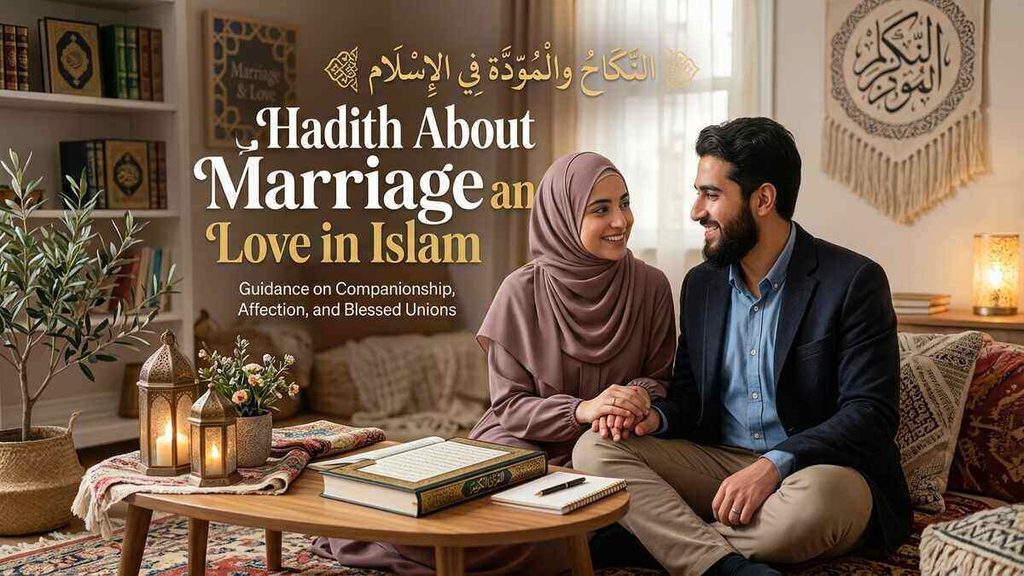
What Do Hadith Say About Marriage and Love in Islam?
The hadith teach that marriage is a source of protection, companionship, and real affection, and that love between spouses is something to nurture, not hide. The Prophet ﷺ openly said he loved his wife Aisha (may Allah be pleased with her). He praised the best husbands as those who treat their wives well. He also said nothing compares to marriage for two people who love each other.
Those three ideas run through almost every hadith on the subject: love is real, it’s allowed, and it’s your responsibility to protect it.
Which Hadith Encourage Marriage in Islam?
Some well-known traditions depict marriage as an advisable, even beloved, part of life. They consider it more than a social obligation.
The hadith on marriage as protection
The Prophet ﷺ said: “O young men, whoever among you can afford marriage should marry, for it lowers the gaze and protects chastity.” This is reported in Sahih al-Bukhari (5066) and Sahih Muslim (1400). He added that anyone who can’t marry yet should fast, since fasting helps with self-control.
The point isn’t only restraint. Islam treats marriage as the healthy, honorable place for love and desire to live.
The hadith about two people who love each other
In Sunan Ibn Majah (1847), the Prophet ﷺ is reported to have said that nothing is seen like marriage for two people who love each other. Scholars such as al-Albani graded this narration authentic.
If you only memorize one hadith about marriage and love, make it this one. It tells you that a married couple’s love isn’t a distraction from faith. It’s something the Prophet ﷺ openly recognized and valued.
Marriage and faith
A narration reported by al-Bayhaqi says that when a person marries, they have completed half of their religion, so they should fear Allah regarding the other half. Some scholars graded it hasan, so it’s best cited with that note.
What Does the Prophet ﷺ Teach About Choosing a Spouse?
The Prophet ﷺ taught that religion and character matter most when choosing a spouse, though attraction and family approval also have a place. That balance saves many people from heartbreak.
- Religion and character first. In Tirmidhi (1084), he said that if someone whose religion and character you’re satisfied with proposes, you should accept. Tirmidhi graded it hasan.
- The four reasons. Bukhari (5090) and Muslim (1466) report that people marry for wealth, lineage, beauty, or religion, and he advised choosing the religious one. He wasn’t telling anyone to ignore attraction. He was telling them what lasts.
- Seeing each other beforehand. When a man mentioned a proposal, the Prophet ﷺ told him to look at the woman, since that was more likely to bring love between them (Tirmidhi 1087). Meeting, with proper etiquette, is part of the tradition.
- Consent is required. Bukhari (5136) says a woman can’t be married without her permission. Love can’t be built on pressure.
For couples in the US, this matters. Many families here balance arranged introductions, dating-app culture, and mosque communities. These hadith give you a filter that works in any of those settings: character, mutual consent, and real compatibility.
How Did the Prophet Mohammad Show Love to His Wives?
He showed love openly, with words, play, and loyalty. That’s one of the clearest lessons in any hadith about marriage and love in Islam.
He said it out loud. In Bukhari (3662) and Muslim (2384), Amr ibn al-As asked him who was most beloved to him. The answer was Aisha. He didn’t dodge the question.
He made time for fun. Abu Dawud (2578) reports that he raced Aisha. She won early on. Years later, when she’d gained weight, he won and said it evened the score. It’s a small story, but it shows a husband who was playful with his wife.
He kept loving Khadijah after she died. In Sahih Muslim (2435), he said Allah had granted him her love. He kept sending gifts to her friends long after her passing. That’s loyalty, not just romance.
He encouraged gifts. A hadith in al-Adab al-Mufrad (594), graded hasan, says to give gifts to one another and you’ll love one another. It doesn’t have to be expensive. A coffee left on the counter counts.
What are the best Hadith on treating your spouse well?
The Prophet ﷺ made kindness at home a measure of faith. Here’s a quick reference:
| Hadith | Source | Lesson |
|---|---|---|
| “The best of you are the best to their families, and I am the best to my family.” | Tirmidhi 3895, Ibn Majah 1977 | Your home life shows your real character |
| “The most complete believers in faith are those with the best character, and the best of you are the best to their wives.” | Tirmidhi 1162 | Good conduct is part of faith |
| A believing man shouldn’t hate a believing woman; if he dislikes one trait, he’ll be pleased with another. | Muslim 1469 | Focus on the whole person, not one flaw |
| “Nothing is seen like marriage for two who love each other.” | Ibn Majah 1847 | Love in marriage is recognized and valued |
The Muslim 1469 hadith is a useful reset. Every marriage has irritations. The Prophet ﷺ taught that you shouldn’t let one flaw erase everything good about your spouse.
How Can You Apply These Hadith in Your Marriage Today?
You apply them through small, repeated habits. A hadith on love is only useful if it changes what you do on a Tuesday night.
- Say it. If the Prophet ﷺ answered plainly when asked who he loved, you can tell your spouse you love them.
- Protect play. Between work, kids, and commutes, many American couples go weeks without fun. Schedule it like a prayer time.
- Give small gifts. Follow the al-Adab al-Mufrad advice. Consistency beats price.
- Speak well of each other. Praise your spouse in front of family. Don’t vent in public.
- Make dua together. The Quran describes spouses as a source of tranquility, with affection and mercy placed between them (30:21). Ask for that directly.
- Seek counsel early. If things feel stuck, talk to a trusted imam or a licensed Muslim counselor before resentment builds.
Frequently Asked Questions
Is there a hadith that says love in marriage is valued in Islam?
Yes. In Ibn Majah (1847), the Prophet ﷺ is reported to have said that nothing is seen like marriage for two who love each other. Scholars have graded it authentic. It’s one of the most direct statements on the topic.
Did the Prophet Muhammad ﷺ say he loved his wife?
Yes. Bukhari (3662) and Muslim (2384) report that when asked who was most beloved to him, he named Aisha. He also spoke of being granted love for Khadijah (Muslim 2435).
Is it allowed to meet before marriage in Islam?
Islam allows a proposed couple to see and speak with each other within proper limits. Tirmidhi (1087) records the Prophet ﷺ encouraging a man to look at the woman he intended to marry, since it makes love between them more likely. Local customs vary, so involve family or a trusted guide.
Are all hadith about marriage and love authentic?
No. Some narrations on marriage and romance circulate widely online without a reliable chain. Check the grading from established scholars, and cite the collection and number, as this article does.
Final Thoughts
The hadith show that Islam doesn’t separate faith from affection. The Prophet ﷺ chose partners for character, said he loved his wives, played with them, remembered them, and taught that kindness at home is a mark of faith.
Start with one habit this week. Tell your spouse something specific you appreciate, or leave a small gift. Then bookmark this guide and share it with someone preparing for marriage.
Want this saved as a file for publishing? I can export it.
FAQPage Schema (JSON-LD)
{
  "@context": "https://schema.org",
  "@type": "FAQPage",
  "mainEntity": [
    {
      "@type": "Question",
      "name": "Is there a hadith that says love in marriage is valued in Islam?",
      "acceptedAnswer": {
        "@type": "Answer",
        "text": "Yes. In Sunan Ibn Majah (1847), the Prophet Muhammad (peace be upon him) is reported to have said that nothing is seen like marriage for two who love each other. Scholars such as al-Albani graded the narration authentic."
      }
    },
    {
      "@type": "Question",
      "name": "Did the Prophet Muhammad say he loved his wife?",
      "acceptedAnswer": {
        "@type": "Answer",
        "text": "Yes. Sahih al-Bukhari (3662) and Sahih Muslim (2384) report that when asked who was most beloved to him, he named Aisha. He also spoke of being granted love for Khadijah (Sahih Muslim 2435)."
      }
    },
    {
      "@type": "Question",
      "name": "What is the best hadith about treating your wife well?",
      "acceptedAnswer": {
        "@type": "Answer",
        "text": "The most quoted is in Tirmidhi (3895) and Ibn Majah (1977): the best of you are the best to their families, and the Prophet was the best to his family. Tirmidhi (1162) links good treatment of wives to the completeness of faith."
      }
    },
    {
      "@type": "Question",
      "name": "Is it allowed to meet before marriage in Islam?",
      "acceptedAnswer": {
        "@type": "Answer",
        "text": "Islam allows a proposed couple to see and speak with each other within proper limits. Tirmidhi (1087) records the Prophet encouraging a man to look at the woman he intended to marry, since it makes love between them more likely."
      }
    },
    {
      "@type": "Question",
      "name": "Are all hadith about marriage and love authentic?",
      "acceptedAnswer": {
        "@type": "Answer",
        "text": "No. Some narrations on marriage and romance circulate online without a reliable chain. Check the grading from established scholars and cite the collection and number."
      }
    }
  ]
}
