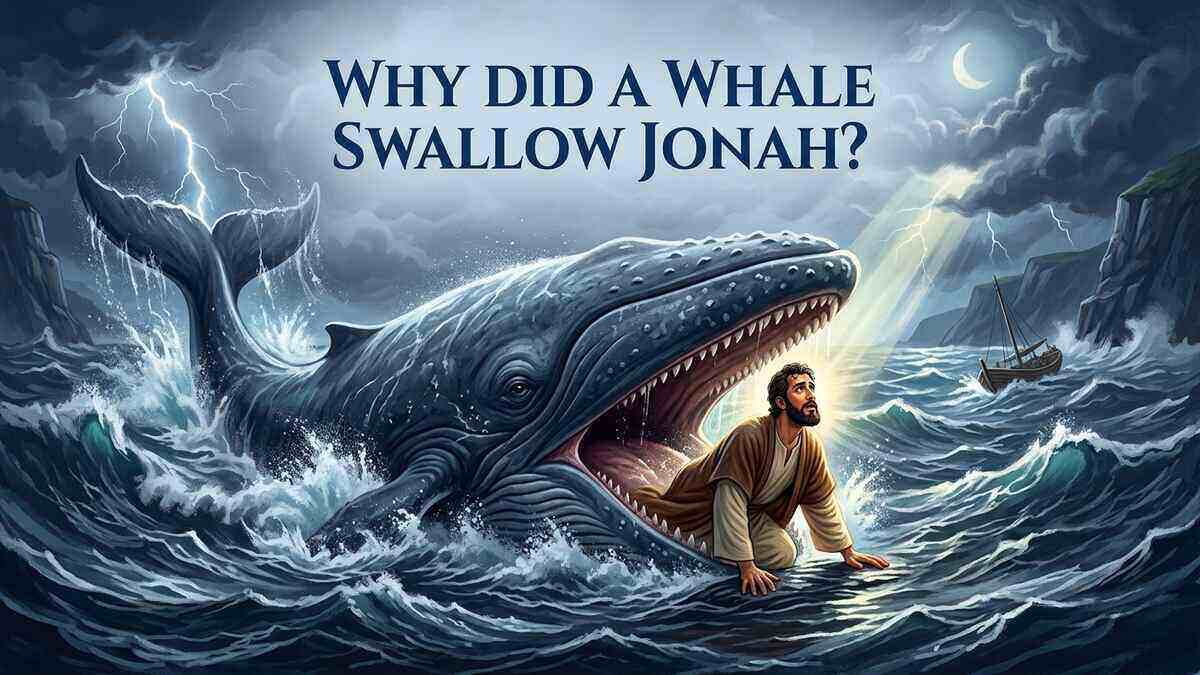
Story of Prophet Yunus and Whale: A Journey from Darkness to Mercy
A man walks away from his duty, boards a ship, and ends up inside a fish in the middle of the sea. It sounds like a fable, yet the story of Prophet Yunus and whale is one of the most quoted accounts in the Quran, and it carries a message that fits almost any hard season of life.
Below, you’ll find the full story in order, what the Quran says (and doesn’t say), the dua that saved him, and five lessons you can use today.
Who Was Prophet Yunus (Jonah)?
Prophet Yunus (peace be upon him) was a messenger of Allah, known in the Bible as Jonah. The Quran lists him among the prophets in Surah An-Nisa and Surah Al-An’am, and an entire chapter, Surah Yunus, carries his name.
Here’s a detail many readers miss: he is also called Dhun-Nun (“the man of the fish”) in Surah Al-Anbiya and Sahib al-Hut in Surah Al-Qalam. Both titles point straight at the most dramatic moment of his life.
Sent to the people of Nineveh
Islamic tradition and classical commentary place his mission in Nineveh, an ancient city in what is now northern Iraq. The Quran itself doesn’t name the city. It says he was sent to a people numbering a hundred thousand or even more (Surah As-Saffat, 37:147).
Why Did Prophet Yunus Leave His People?
Yunus called his people to worship Allah alone. They refused. After a long stretch of rejection, he left in frustration, apparently before Allah had given him permission to go.
Surah Al-Anbiya (21:87) describes him as leaving “in anger.” Scholars explain that this was not anger at Allah. He was upset at his people’s stubbornness. Still, a prophet is expected to stay at his post until the command to leave arrives, and that is where Yunus slipped.
This matters for the whole story. His test was not about disbelief. It was about patience.
The Story of Prophet Yunus and Whale, Step by Step
Here’s the sequence of events, as drawn from Surah As-Saffat (37:139-148) and Surah Al-Anbiya (21:87-88).
1. The ship and the lots
Yunus boarded a ship that was overloaded. As the vessel struggled, the passengers drew lots to decide who should be thrown overboard to lighten the load. The lot fell on Yunus, and the Quran says he was among those who lost.
2. Swallowed by the fish
He was thrown into the sea, and a great fish swallowed him. The Quran says plainly that he was blameworthy at that moment (37:142), and that he was kept alive inside the creature.
3. Darkness upon darkness
Inside the fish, Yunus was surrounded by what the Quran calls “darknesses” in the plural. Commentators usually describe three layers: the night, the deep water, and the belly of the creature itself. Nobody could hear him. No ship was coming. He had one option left, and he took it.
The Dua of Prophet Yunus
Out of that darkness he called on Allah with a short supplication:
La ilaha illa anta, subhanaka, inni kuntu minaz-zalimin. “There is no god but You. Glory be to You. Truly, I have been among the wrongdoers.” (Surah Al-Anbiya, 21:87)
Notice what’s missing. He doesn’t bargain. He doesn’t list excuses. He affirms Allah’s oneness, declares Allah free of any fault, and admits his own mistake. That order is worth copying.
The Prophet Muhammad (peace be upon him) is reported in Jami at-Tirmidhi to have said that no Muslim calls on Allah with this dua for any need except that Allah answers it. Many Muslims recite it during hardship, illness, and anxiety for that reason.
What Happened After the Whale?
Allah accepted his repentance and told us directly: “So We responded to him and saved him from the distress. And thus do We save the believers” (21:88).
The fish cast Yunus onto a bare shore. The Quran says he was sick (37:145). Allah then caused a gourd plant to grow over him, giving shade and food while he recovered.
The ending is the part people rarely hear. Surah Yunus (10:98) notes that his people believed, and Allah lifted the punishment that had been coming. Think about that. The city he gave up on is the one that turned back. Yunus was then sent back to them, and they enjoyed life for a time.
Whale or Fish? What the Quran Actually Says
Most people search for the “story of Prophet Yunus and whale,” so that’s the phrase we’ve used here. But the Quran uses the Arabic words al-hut and an-nun, which mean a large fish or sea creature. Later tradition and popular retelling settled on “whale.”
| Common claim | What the sources say |
|---|---|
| He was swallowed by a whale | The Quran says a great fish (al-hut). “Whale” is the common retelling. |
| He stayed inside for three days | The Quran gives no number. Figures you hear (three days, seven days, forty days) are not stated in the Quran. |
| The city was Nineveh | Stated in tradition and commentary, not named in the Quran. |
| He disbelieved or lost faith | No. The Quran presents him as a prophet who made a mistake in patience, then repented. |
If you want to stay on safe ground, stick to what’s in the verses. The numbers and the city are useful background, but they aren’t the heart of the story.
5 Lessons from the Story of Prophet Yunus
- Patience is part of the job. Yunus left too early. Results belong to Allah. Effort belongs to us.
- No situation is too dark for dua. He called out from three layers of darkness and was heard.
- Admit the mistake out loud. His dua contains a direct confession. Honest repentance moves faster than excuses.
- Don’t write people off. His people turned to belief after he’d given up hope.
- Even prophets make mistakes. A hadith reported by Bukhari warns against saying anyone is better than Yunus ibn Matta, which keeps both pride and harsh judgment in check.
Frequently Asked Questions
What is the story of Prophet Yunus in short?
Prophet Yunus was sent to guide his people, grew frustrated at their refusal, and left without permission. He boarded a ship, was thrown into the sea, and was swallowed by a great fish. He repented with a dua, Allah saved him, and his people later believed.
How long was Prophet Yunus in the whale?
The Quran does not give a duration. Numbers like three or forty days appear in later retellings, but they aren’t confirmed in the Quran, so it’s best to say Allah knows.
What dua did Prophet Yunus make in the whale?
He said La ilaha illa anta, subhanaka, inni kuntu minaz-zalimin, found in Surah Al-Anbiya (21:87). It affirms Allah’s oneness, glorifies Him, and admits fault.
Is it a whale or a fish in the Quran?
The Quran uses al-hut and an-nun, which mean a great fish or sea creature. “Whale” is the popular English retelling.
Which surah is about Prophet Yunus?
Surah Yunus (chapter 10) is named after him. His story with the fish appears mainly in Surah As-Saffat (37:139-148), Surah Al-Anbiya (21:87-88), and Surah Al-Qalam (68:48-50).
Conclusion
The story of Prophet Yunus and whale is really a story about getting a second chance. A man makes a mistake, hits the lowest point imaginable, and is pulled out the moment he turns back with honesty.
Take one action today: learn the dua of Prophet Yunus by heart and say it the next time life feels dark. Then read Surah As-Saffat (37:139-148) slowly in a translation you trust, and share this article with someone who needs the reminder.

4 thoughts on “Story of Prophet Yunus and Whale: A Journey from Darkness to Mercy”