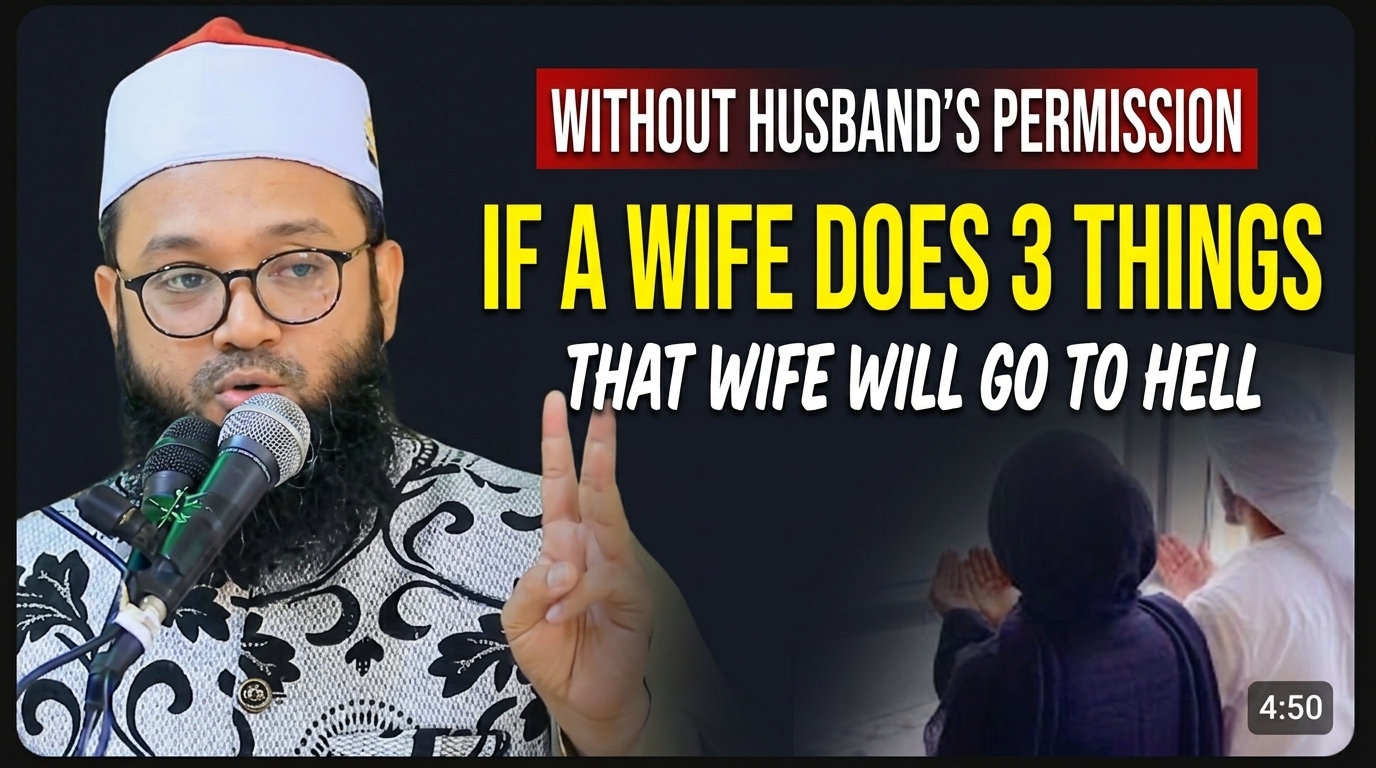
You have probably seen the post: “If a wife does these three things without her husband’s permission, she will be in Hell.” It gets shared in family groups and social feeds, often with no source. Some readers feel afraid. Others feel angry. Many simply want to know if it is true.
This guide checks what authentic Islamic sources actually say. You will learn which three things the Prophet ﷺ spoke about, what the hadith says and does not say about Hell, which popular claims are not authentic, the exceptions, and how a husband and wife can handle these matters with mercy and respect. It applies to Muslim families worldwide.
Is There a Hadith That Says Hell for These Three Things?
Short answer: No. We could not find an authentic hadith that says “if a wife does these three things without her husband’s permission, she will be in Hell.” The authentic narration that comes closest says certain actions are “not lawful” without his permission.
That distinction matters. A ruling that something is not permissible means it is a sin if done without a valid reason. It does not mean that the person is destined for Hell. Allah alone judges, and the Qur’an reminds us not to despair of His mercy (39:53). A believer who makes a mistake and repents is forgiven.
The Three Things in the Authentic Hadith
The closest authentic narration is reported by Abu Hurairah (RA). The Prophet ﷺ said it is not lawful for a woman to observe voluntary fasting when her husband is at home without his permission, and she should not allow anyone into his house without his permission. It is in Sahih al-Bukhari and Sahih Muslim, and Sunan Abi Dawud 2458 also records it. A related narration adds a third matter: spending from his wealth. sunnahsunnah
1. Voluntary fasting while he is at home
This applies only to voluntary (nafl) fasts, such as Mondays and Thursdays or the extra days of Shawwal. Scholars explain that obligatory worship needs no one’s permission. A wife does not need approval to fast in Ramadan, make up missed fasts or pray her obligatory prayers. seekersguidance
Why the rule exists: Scholars explain that the husband has a right to intimacy and companionship, and voluntary worship should not undermine that. If the husband is travelling, or if he clearly does not mind, the concern is removed.
2. Allowing someone into his house without his permission
This is about protecting the home, privacy and trust. Scholars note that letting someone enter without his consent could create suspicion and hurt the marriage. Emergencies and necessities are exceptions, as are the people he clearly would not mind, such as a mahram relative visiting for a short time in the normal course of life.
3. Spending from his wealth without his permission
One narration from Abu Umamah (RA) quotes the Prophet ﷺ saying a woman should not spend anything from her husband’s house without his permission. When the Companions asked about food, the answer was that food is among the best of their wealth. Scholars understand this to mean larger or unusual amounts. Small, customary amounts that would not upset him are generally acceptable. alimseekersguidance
Her own money is different. According to the Shafi’i sources cited by Shaykh Muhammad Fayez Awad, a woman may give charity from her own wealth and manage her property without her husband’s permission. A wife’s money belongs to her. seekersguidance
Claims That Are Not Authentic
Social media posts often mix authentic hadith with weak or unverified wording. Be careful with these:
- “The angels curse her if she leaves the house without permission.” One scholar who was asked about this narration said he had not seen it as one full, established hadith. Do not share it as authentic. islamqa
- “Three major sins are written for her.” The narration about a woman fasting without permission and then refusing her husband is quoted widely. Scholars at HadithAnswers say authentic hadith exist about seeking permission for voluntary fasts without mentioning three major sins. Use the authentic wording instead. islamqa
- “Her fasting will not be accepted.” Several weak narrations like this circulate. Check the grading before repeating them.
Scholars distinguish between weak and fabricated narrations, and good teachers are careful not to attach threats of Hell to the Prophet ﷺ without a sound source.
Exceptions and Limits
Islam is balanced. Here are the key limits scholars mention:
- Obligatory acts need no permission. Fard prayers, Ramadan fasting and Hajj are not subject to his approval.
- There is no obedience in disobedience to Allah. The Prophet ﷺ taught that obedience is only in what is good (Sahih al-Bukhari 7257, Sahih Muslim 1840). A husband cannot order his wife to commit a sin.
- Necessity and emergencies. A medical emergency or a danger to life allows what is normally restricted.
- His absence or clear consent. The fasting ruling applies “when he is at home,” and consent can be general or implied.
- Her own property is hers. She does not need permission to manage her own earnings.
- Harm is never allowed. These rulings are about order and trust in marriage, not about control or abuse.
Scholars of different schools also discuss other matters, such as leaving the house. Shafi’i sources, for example, say a wife should not leave her husband’s house without his permission, even to visit relatives. Other scholars allow more flexibility, especially for necessity, work agreed upon in the marriage, family ties and religious needs. If you need a ruling for your situation, ask a qualified local scholar who knows your circumstances. seekersguidance
The Husband’s Duties Matter Too
Reading these hadith without the husband’s responsibilities gives only half the picture.
- Marriage is built on mercy. The Qur’an says Allah placed “love and mercy” between spouses (30:21).
- Rights are mutual. The Qur’an says wives have rights similar to those held over them, according to what is fair (2:228).
- The Prophet ﷺ set the example. He said the best of you are those who are best to their families (Jami’ at-Tirmidhi 3895), and Aisha (RA) reported that he helped with household work (Sahih al-Bukhari 676).
- He must provide, protect and consult. Leadership in marriage is about care, not domination.
- Abuse and humiliation are forbidden. No hadith allows a husband to harm his wife, deny her basic rights or use these rulings as a weapon.
If you are in a relationship that feels controlling or unsafe, please talk to a trusted family member, a scholar or a counselor, and contact local support services if you are in danger.
What If You Have Already Done One of These?
Do not panic. Here is a simple path:
- Remember Allah’s mercy. Sincere repentance wipes sins away.
- Make istighfar and resolve to do better.
- Talk calmly with your spouse. Explain your intentions and agree on expectations going forward.
- Do not use shame or fear as tools in the marriage.
- Seek knowledge from reliable sources, not viral posts.
For comfort during family stress, read our guide to authentic dua for healing from the Qur’an and our dua to fulfill the hope of the heart.
Practical Tips for a Healthy Marriage
- Ask early and kindly. A quick message avoids misunderstanding.
- Set shared expectations. Decide together about visitors, spending and voluntary worship.
- Assume good intentions. Most conflict comes from silence, not malice.
- Respect each other’s spiritual goals. Support, do not obstruct, each other’s worship.
- Learn together. Study authentic hadith as a couple, for example the hadith on sincere advice and good character in Imam Nawawi’s 40 Hadith.
Is it a sin for a wife to fast voluntarily without her husband’s permission?
Yes, if he is at home and has not agreed. This is based on Sahih al-Bukhari and Sahih Muslim. It does not apply to obligatory fasts.
Will a wife go to Hell for doing these things?
No authentic hadith states that. These actions are described as “not lawful” without permission, and sin can be forgiven through repentance.
Can a wife spend her own money without her husband’s permission?
Yes. Her wealth belongs to her, though discussing big decisions is good practice.
Can a wife leave the house without her husband’s permission?
Scholars differ on details. Many require general permission, with exceptions for necessities and customary needs. Ask a qualified scholar about your situation.
Does this mean a husband can control his wife?
No. Islam gives both spouses rights and duties and forbids harm and injustice.
Conclusion
The viral claim that “if a wife does these three things without her husband’s permission, she will be in Hell” is not supported by an authentic text. The real hadith speaks about order, trust and consideration in marriage, and it comes with limits, exceptions and a husband’s own duties. The best marriages are built on mercy, communication and knowledge, not fear.
Your next step: Before you share any viral hadith, check its source on Sunnah.com or ask a trusted scholar. Share this article with someone who has been worried by the claim, and tell us in the comments what topic you would like us to fact-check next.
