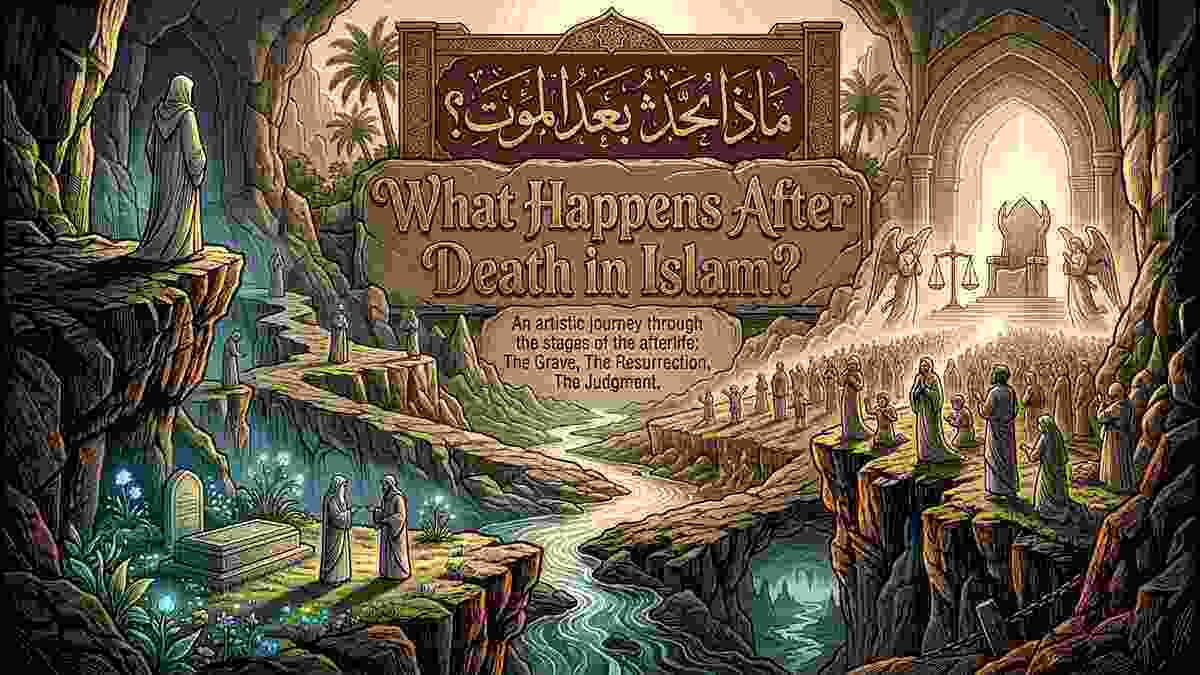
What Happens After Death in Islam
Every one of us will face it, yet most of us avoid thinking about it. A grandparent passes away, a friend’s name appears in a sad message, and suddenly the questions arrive. Where does the soul go? Does the person feel anything? Is there a warning sign beforehand? This guide walks through what the Quran and authentic hadith say, step by step, and it clears up a popular myth about “signs 40 days before death in Islam” along the way.
What Happens After Death in Islam? The Short Answer
In Islam, death is a transition, not an ending. The soul is taken by angels, the body is washed and buried, and the person enters a stage called Barzakh, where they wait until the Day of Resurrection. Everyone is then raised, judged, and sent to Paradise or Hell.
That’s the whole journey in one breath. The rest of this article unpacks each stage, with sources, so you know what’s confirmed and what’s just folklore.
The Moment of Death: What the Quran and Sunnah Describe
The Quran is clear that every soul will taste death (3:185). It also tells us that the angel of death, along with angels assisting him, takes the soul (32:11).
How Muslims Care for a Dying Person
The Prophet ﷺ told his Companions to prompt their dying to say La ilaha illa Allah (Sahih Muslim 916). Notice the word “prompt”. You remind gently, you don’t pressure. You stay calm, make dua, and keep the room peaceful.
After death, the body is washed, shrouded, prayed over in the funeral prayer, and buried without unnecessary delay. These simple steps are among the last rights one Muslim owes another.
Are There Signs 40 Days Before Death in Islam?
Short answer: no authentic hadith or Quran verse gives a fixed 40-day warning.
You’ve probably heard the story. A leaf falls from a tree beneath Allah’s Throne with a person’s name on it, and the angel of death collects the soul forty days later. It spreads quickly on social media, but scholars who’ve looked at the chains of narration describe such reports as weak or fabricated. They don’t appear in the authentic collections.
Here’s what the Quran does say: no one knows when or where they’ll die except Allah (31:34). That single verse should settle it. If a sign existed that let people count down to the day, it would contradict the idea that the hour of death is among the things only Allah knows.
Where Does the Number 40 Come From?
Nobody can say for sure. Forty shows up in other Islamic contexts, like the stages of human creation, so it’s easy for it to get attached to unrelated stories. In South Asia, including Bangladesh, many families also gather on the fortieth day after a death, a custom known as chehlum. Many scholars say specific rituals like that have no basis in the Sunnah, so it’s wise to ask a trusted local scholar about your family’s practice.
What About Dreams, Feelings, and Physical Signs?
Some righteous people have reported a sense of peace or a true dream near the end of life. Scholars treat these as personal gifts from Allah, not rules and not predictions. If you notice a strange symptom or a vivid dream, don’t panic and don’t announce a date. See a doctor for the symptom and turn to Allah either way.
One report says a believer may die with sweat on the forehead (Jami’ at-Tirmidhi 982). It’s graded Sahih by some, though al-Tirmidhi himself called it hasan. That describes the moment of death itself. It isn’t a test you can run on yourself weeks in advance.
Also remember the Prophet ﷺ discouraged wishing for death because of hardship (Sahih al-Bukhari 5671). Prepare, yes. Hurry it, no.
The Grave and Barzakh: What Happens After Burial?
Once the person is buried, the next stage begins. The Quran calls it Barzakh, a barrier that lasts until the Day they are raised (23:99-100).
The Questioning by Two Angels
A sound hadith narrated by al-Bara’ ibn ‘Azib (Sunan Abi Dawud 4753, graded Sahih by al-Albani) describes two angels who ask the deceased three questions: Who is your Lord? What is your religion? And who is the man who was sent among you?
The believer answers that Allah is his Lord, Islam is his religion, and Muhammad ﷺ is Allah’s Messenger. A caller from the heavens declares him truthful, and his grave is opened toward Paradise. The person who rejected the truth can’t answer, and the grave closes in on him.
Notice something practical here. These aren’t trick questions. They’re the same three things a Muslim learns on day one and must keep alive in the heart.
Why the Grave Matters
The Prophet ﷺ called the grave the first stage of the Hereafter. If a person passes it, what follows is easier, and if they don’t, what follows is harder (Jami’ at-Tirmidhi 2308, graded Hasan). The same report says the Companion ‘Uthman used to weep at graves until his beard was wet.
That doesn’t mean we should live in dread. It means we should take this stage seriously, and it’s why the Prophet ﷺ urged believers to seek refuge in Allah from the punishment of the grave.
The Day of Resurrection: From Trumpet to Final Judgment
Barzakh ends when the trumpet is blown a second time and everyone rises (39:68). Then comes the reckoning.
The Scale and the Record
The Quran says deeds will be weighed with perfect justice, and not even the weight of a mustard seed will be overlooked (21:47). Another verse puts it plainly: whoever does an atom’s weight of good will see it, and whoever does an atom’s weight of evil will see it (99:7-8).
The Final Destinations
After judgment, people go to Paradise or to Hell. If you want to know what the Fire is described like in the sources, read our guide: What Does Jahannam Really Look Like?. For balance, remember that the Quran also describes Paradise in vivid, hopeful terms, and that Allah’s mercy is vast.
How Can You Prepare for Death in Islam?
Preparation isn’t about gloom. It’s about living with a clear head. A few things you can start today:
- Repent often. Don’t wait for a “right time”. Say sorry to Allah tonight.
- Settle debts and rights. Return what you borrowed and apologize to people you’ve wronged.
- Protect your prayers. The first thing asked about is prayer, so keep it steady.
- Write a will. Keep your affairs organized so your family isn’t left confused.
- Invest in ongoing charity. The Prophet ﷺ said a person’s deeds end at death except for three: continuing charity, beneficial knowledge, and a righteous child who prays for them (Sahih Muslim 1631).
- Remember death often. The Prophet ﷺ advised remembering the destroyer of pleasures. A short reminder keeps priorities honest.
Frequently Asked Questions
What happens to the soul immediately after death?
The soul is taken by the angel of death and his assistants (Quran 32:11). Authentic hadith describe it then being received by angels, and the person enters the stage of Barzakh after burial. Scholars say the details beyond the texts belong to the unseen.
Are there signs 40 days before death in Islam?
No authentic evidence supports a fixed 40-day sign. The popular leaf story is considered weak or fabricated by scholars, and the Quran says only Allah knows when a person will die (31:34).
Is the punishment of the grave real?
Yes, according to mainstream Sunni teaching, based on authentic hadith such as the report of al-Bara’ ibn ‘Azib (Abu Dawud 4753). The Prophet ﷺ taught his community to seek refuge from it. The nature of this experience is part of the unseen.
How long does Barzakh last?
Barzakh lasts from death until the Day of Resurrection (Quran 23:99-100). Exactly how time is experienced there hasn’t been revealed in detail.
Can the living help the dead?
Yes, in ways the texts confirm: sincere dua, ongoing charity (sadaqah jariyah), and good deeds that continue to benefit them (Sahih Muslim 1631). Check the details of specific practices with a qualified scholar.
Final Thoughts
So, what happens after death in Islam? The soul is taken, the grave tests a person on faith, Barzakh waits for the Day of Resurrection, and then comes judgment. There’s no 40-day countdown, but there is something better: today. Today you can repent, forgive, learn, and pray.
Don’t just close this tab and move on. Pick one preparation step from the list above and do it this week. Then explore more Quran- and hadith-based guides on deentruthhub.com, and share this article with someone who needs a calm, honest answer.
Allah knows best.
Sources Checked
- Claim about “40 days before death”: IslamOnline Fiqh: 40 Days Before Death, Fact or Myth
- Questioning in the grave, Sunan Abi Dawud 4753 (Sahih): sunnah.com/abudawud:4753
- The grave as the first stage, Jami’ at-Tirmidhi 2308 (Hasan): sunnah.com/tirmidhi:2308
- Believer dies with sweat on the forehead, Jami’ at-Tirmidhi 982: sunnah.com/tirmidhi:982
Editor’s note before publishing: The verified references are the four above. The rest (Quran 3:185, 32:11, 31:34, 23:99-100, 39:68, 21:47, 99:7-8; Sahih Muslim 916 and 1631; Sahih al-Bukhari 5671; the hadith on prayer being the first thing asked about; and the hadith on remembering the destroyer of pleasures) were cited from memory. Have a qualified reviewer confirm them. Note that Tirmidhi himself called hadith 982 “hasan” and some scholars discuss a link in its chain, so the article words it cautiously. Also confirm the chehlum comment with a local scholar.

2 thoughts on “What Happens After Death in Islam?”